Here is the scenario that keeps creators up at night: you set up a comment automation rule, flip it to autonomous mode, and go to bed. Overnight, a viewer leaves a sarcastic comment under your latest video — something like "wow, amazing editing, really groundbreaking stuff" — and your positive-feedback rule interprets it at face value. By morning, your channel has auto-replied with a chipper "Thanks so much! I really appreciate that!" to what was clearly a backhanded insult, and the screenshot is making the rounds on Twitter. That is the cost of premature autonomy. It is not hypothetical. It happens to channels that skip the learning phase.
The most reliable path to scaling YouTube comment automation is not choosing between approval mode and autonomous mode — it is knowing when to graduate from one to the other. Channels that get this right share a common pattern: they start with every rule in approval mode, learn from the edge cases, then selectively promote individual rules to autonomous once they have proven themselves. This article walks through exactly how to do that, with concrete examples and a phased rollout plan you can follow week by week.
Quick answer: use approval mode for new rules, sensitive topics, and high-risk channels. Promote rules to autonomous only after they have a proven track record of accurate matches over a representative sample of comments.
What Each Mode Does
Approval mode means that when a rule matches a comment, the suggested action (reply, hide, pin, etc.) gets queued for a human to review before anything happens on YouTube. You see the matched comment, the proposed response, and why the rule triggered. You can approve it as-is, edit the response, or reject it entirely. Nothing touches your channel until you say so.
Think of approval mode as a training period for your rules. When you first set up a rule that replies to comments mentioning "what camera do you use?" with your gear list, approval mode lets you see every comment it catches. You quickly learn whether it is matching the right things — and just as importantly, whether it is missing anything or firing on comments that are not quite right. Maybe someone says "what camera angle is that?" and the rule triggers because of the word "camera." In approval mode, you catch that, refine the rule, and no harm is done.
Autonomous mode means the rule executes immediately with no human in the loop. When a comment matches, the action fires within minutes. This is the goal for mature, well-tested rules — it is where you get real scale. A channel receiving 500 comments a day cannot manually approve every FAQ response. But autonomous mode only works safely when you have high confidence that the rule matches accurately and the response is appropriate across the range of comments it will encounter.
The critical difference is not just speed — it is reversibility. An approval-mode mistake costs you a few seconds of review time. An autonomous-mode mistake costs you a public reply that viewers have already seen and potentially screenshotted. You can delete a bad reply, but you cannot un-send it.
Most channels should also maintain YouTube's built-in moderation controls alongside automation. The comment settings panel lets you hold potentially inappropriate comments for review, and the spam queue catches the most obvious junk. Think of these as your safety net running underneath the automation layer.
Risk vs Speed Tradeoff
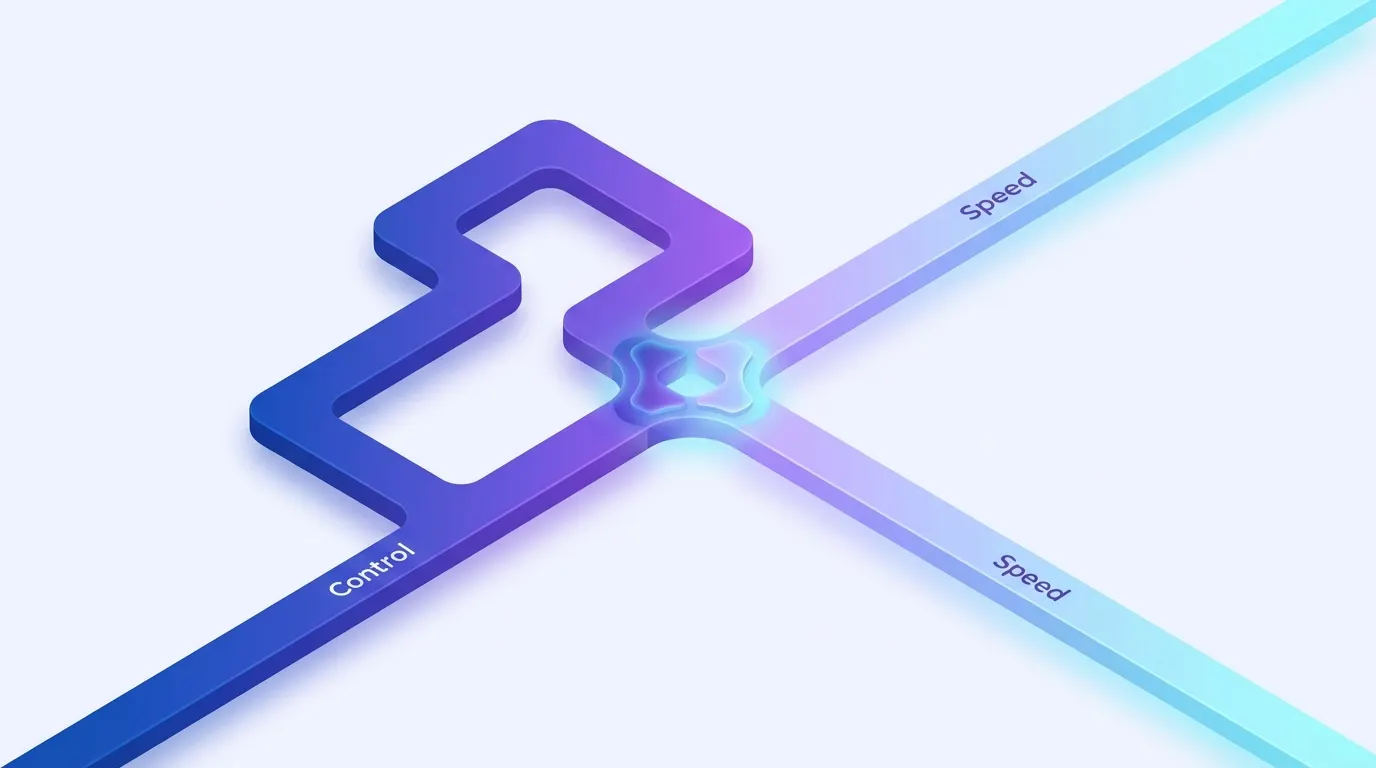
Every automation decision involves the same fundamental tension: how fast do you want to respond versus how much risk are you willing to accept? Approval mode gives you maximum control at the cost of latency. A comment might sit in your queue for hours before you review and approve the response. Autonomous mode gives you near-instant responses at the cost of occasionally getting it wrong with no human safety check.
Here is what that tradeoff looks like in practice. Imagine you run a cooking channel and you have three rules set up:
- Recipe link rule: When someone asks "what recipe is this?" or "can you share the recipe?", reply with a link to your website. This is low-risk — the question is unambiguous, the response is factual, and there is almost no way it goes wrong. This is a strong candidate for autonomous mode.
- Positive engagement rule: When someone says something encouraging, reply with a thank-you message. This is medium-risk — sarcasm detection is genuinely hard, and a misfire here is embarrassing. You want this in approval mode until you have seen at least a few hundred matches and are confident in the accuracy.
- Negative feedback rule: When someone criticizes your content, reply with an empathetic acknowledgment. This is high-risk — the wrong response to a frustrated viewer can escalate the situation and attract more negative attention. This should stay in approval mode for a long time, possibly forever.
The hybrid model — where different rules run in different modes — is not a compromise. It is the end state you should be aiming for. Mature channels typically run 60-70% of their rules autonomously (the simple, high-confidence ones) while keeping the remaining 30-40% in approval mode (anything involving sentiment, controversy, or nuance). This gives you the speed benefits of automation where it is safe and human oversight where it matters.
When to Use Approval Mode
The default for any new rule should always be approval mode. Full stop. Even if the rule seems dead simple, you need to see real data before trusting it to run unsupervised. Here are the specific situations where approval mode is especially important:
Launching new rule sets for the first time
When you first create a rule, you are working with assumptions about how viewers phrase things. Those assumptions are almost always incomplete. You might create a rule to catch comments asking about your upload schedule, using trigger phrases like "when do you upload" and "what's your schedule." In approval mode, you discover that people also write "how often do you post," "when's the next vid," and "do you have a posting schedule" — none of which your original triggers caught. You also discover that "when do you upload" sometimes appears in the middle of a completely different question, like "I'm curious when do you upload because I want to set a reminder — but also, what mic is that?" Approval mode gives you the feedback loop to refine the rule before it starts responding to viewers on its own. For help designing effective rules, see our auto-reply rules ideas guide.
Handling sensitive or high-stakes topics
Any rule that touches support requests, refund inquiries, legal questions, health advice, or controversial topics should run in approval mode indefinitely — or at least for much longer than your average rule. The reason is simple: the cost of a wrong response in these areas is dramatically higher. If your autonomous rule sends a flippant reply to a viewer describing a bad experience with a product you promoted, the damage goes far beyond one comment thread. Viewers screenshot these interactions. They get shared in community posts and on social media. One tone-deaf automated reply to a sensitive comment can become a narrative about your channel not caring about your audience.
Onboarding new moderators
If you have team members handling your approval queue, running rules in approval mode serves double duty: it catches edge cases in your rules and it trains your moderators on your channel's voice and policies. New moderators learn what kinds of replies are appropriate, what tone you use, and where the boundaries are. This is much more effective than writing a style guide and hoping they read it. The approval queue becomes a living training environment. For structuring your team's workflow around the approval queue, see the team workflow guide.
Channels recovering from moderation incidents
If your channel has recently dealt with a controversy, a brigading event, or a community guidelines strike, switching everything back to approval mode is a defensive move. During these periods, your comment section is under a microscope. Viewers and potentially YouTube reviewers are paying closer attention than usual. An automated reply that would normally be fine can look tone-deaf in the context of a recent incident. Approval mode lets you be deliberate about every public interaction until things cool down.
When to Promote Rules to Autonomous
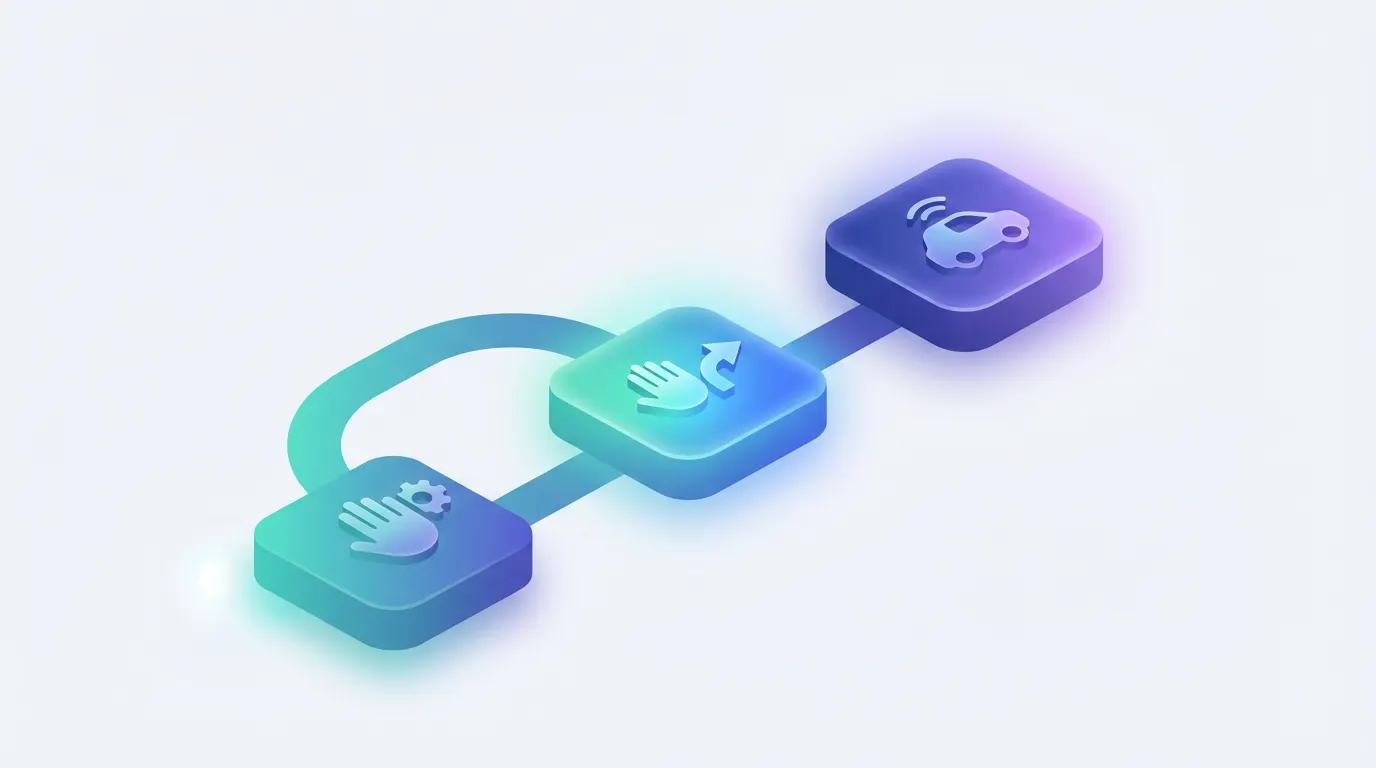
Promoting a rule from approval to autonomous is not a calendar event — it is a data-driven decision. You are looking for specific evidence that the rule is reliable enough to run without supervision. Here is the framework:
High acceptance rate over a meaningful sample
The single most important metric is your approval rate: out of all the actions this rule suggested, what percentage did you approve without editing? If a rule has a 95%+ approval rate over at least 50-100 suggestions, it is telling you that the rule consistently matches the right comments and generates appropriate responses. Below 90%, the rule still needs tuning. Between 90% and 95%, it is borderline — you might promote it but keep a closer eye on the weekly audit. Above 95% over a representative sample, you can promote with confidence.
The "representative sample" part matters. A rule that has been approved 20 out of 20 times might just not have encountered an edge case yet. You want to see it handle variety — different phrasings, different comment lengths, different emotional tones. If your channel gets bursts of comments after each upload, make sure the sample spans at least two or three upload cycles so you have seen the full range.
Low severity of errors
Not all errors are equal. A rule that occasionally matches a slightly off-topic comment and replies with a generic but harmless "Thanks for watching!" is very different from a rule that misidentifies criticism as praise. When you review the rejections for a rule, categorize them: were the errors minor and forgettable, or were they the kind of thing that would make a viewer think twice about your channel? Rules where the worst-case failure is a mildly irrelevant but polite response are much safer to promote than rules where a failure means a wildly inappropriate reply.
Clear escalation boundaries
Before promoting a rule, define what happens when it encounters something outside its scope. For example, if your FAQ rule is set to autonomous, what happens when someone asks a question that is close to your FAQ topics but not quite covered? Does the rule stay silent (good), or does it fire with a partially relevant answer (bad)? You want rules with clean boundaries — they either match clearly or they do not match at all. Rules that produce "close but not quite" matches are not ready for autonomous mode.
Ongoing quality sampling is in place
Promoting a rule to autonomous does not mean you stop paying attention to it. You should be sampling a random subset of autonomous actions weekly — even just 10-15 per rule — to verify ongoing quality. Comment patterns shift over time. A rule that performed perfectly for three months might start misfiring because your audience has grown, your content has shifted, or internet slang has evolved in ways your triggers did not anticipate. Weekly sampling catches drift before it becomes a problem.
What Can Go Wrong: Real Failure Scenarios
Understanding how autonomous mode can fail helps you design better rules and set smarter promotion thresholds. Here are the most common failure patterns we see:
The sarcasm trap
This is the classic failure mode. Your rule detects positive sentiment — words like "amazing," "great job," "love this" — and replies with a thank-you. But sarcasm uses the exact same vocabulary with opposite intent. "Great job breaking the build in production" and "Great job on this tutorial" look identical to a keyword-based rule. Even AI-powered sentiment detection struggles with sarcasm, especially in short comments without much context. This is why positive-engagement rules should stay in approval mode longer than most other rule types. If you do promote them, make the reply generic enough that it does not look absurd when applied to sarcasm — "Glad you're here!" is safer than "Wow, that means so much to me!"
The context shift
A rule that works perfectly on your regular content can misfire when your content changes. Suppose you run a tech review channel and you have an autonomous rule that responds to "is it worth it?" with a brief summary of your review verdict. That works great on product reviews. Then you post a personal vlog about your journey as a creator, and someone comments "is it worth it?" referring to the lifestyle — and your rule fires with "Absolutely! The battery life alone makes it a must-buy." The rule did not break. Your content context shifted, and the rule was not designed for the new context. Before posting a video that is outside your usual format, consider temporarily pausing autonomous rules that might misfire.
The volume spike
When a video goes viral, the comment section transforms. You get an influx of viewers who are not your regular audience, using language and references your rules were not designed for. A rule that autonomously replies to FAQ-style questions might suddenly be firing on comments from people who are mocking or parodying your content. Volume spikes also amplify the visibility of any mistake — if a bad auto-reply happens on a video with 100 views, maybe five people notice. If it happens on a video with a million views, thousands of people see it. Consider adding a temporary circuit breaker: if a rule is matching at 3x its normal rate, automatically switch it back to approval mode until you can verify the matches are still accurate.
90-Day Rollout Blueprint
The following is a practical week-by-week plan for rolling out automation from scratch. Adjust the timeline based on your comment volume — channels with more comments will accumulate data faster, while smaller channels might need to extend each phase.
Phase 1: Foundation (Days 1-30)
Goal: Build your rule set, establish baselines, and learn what your comment section actually looks like.
Start by setting up your initial rules — all in approval mode. Focus on the most common, most repetitive interactions first. For most channels, these fall into a few buckets: FAQ questions viewers ask on every video (gear, software, schedule), simple engagement acknowledgments (thank-yous for positive comments), and basic moderation (hiding spam or self-promotion). Keep each rule simple. It is better to have five narrow rules that each do one thing well than one broad rule trying to cover everything.
During weeks 1 and 2, review every single suggestion in your approval queue. Do not skip any. You are building an intuition for how your rules behave in the wild. Take notes on patterns: which comments are matching correctly? Which ones are false positives? Which comments should have matched but did not? Use this feedback to refine your trigger conditions and response templates.
During weeks 3 and 4, start tracking metrics for each rule. Calculate approval rates, note the types of errors, and pay attention to how long items sit in the queue before you review them. If you have team members handling the queue, check for consistency — are different reviewers making the same decisions on similar items? If not, your response templates or rule descriptions might need clarification. By the end of the month, you should have a clear picture of which rules are performing well and which need work.
Phase 2: Selective Promotion (Days 31-60)
Goal: Promote your highest-confidence rules to autonomous and monitor the transition closely.
Look at your approval-rate data from Phase 1 and identify the rules with the highest rates — typically FAQ replies and simple acknowledgments. These are your promotion candidates. Before flipping any rule to autonomous, do a final review: look at the last 20-30 suggestions from this rule. If you would approve all of them without edits, the rule is ready.
Promote one rule at a time, not all at once. Give each newly autonomous rule at least a week of running before promoting the next one. During that first week, check the rule's autonomous actions daily. You are looking for anything that made it through that you would have rejected in approval mode. If you find more than one or two issues in the first week, demote the rule back to approval, fix the triggers, and try again in a couple of weeks.
This is also the phase where you refine your remaining approval-mode rules based on what you learned in Phase 1. Some rules might need tighter trigger conditions, better response templates, or to be split into multiple more specific rules. A rule that was catching both "what camera do you use" and "what editing software do you use" might work better as two separate rules with tailored responses for each.
Phase 3: Scale and Sustain (Days 61-90)
Goal: Expand autonomous coverage, establish long-term monitoring habits, and build rollback procedures.
By now you should have 3-5 rules running autonomously and a growing confidence in your system. Continue promoting rules that meet the criteria: 95%+ approval rate, low error severity, clear boundaries. You can also start creating new rules based on patterns you have noticed in Phase 1 and 2 — comments that keep coming up but are not covered by any existing rule.
Establish a weekly review cadence. Every week, spend 15-20 minutes sampling autonomous actions. Pull up a random set of 10-15 actions per rule and verify they are still accurate. Log what you find. If a rule's quality drifts below your threshold, demote it back to approval mode — this is not a failure, it is the system working as intended. Rules can move back and forth between modes as your content and audience evolve.
Finally, build your rollback procedures. Know how to quickly switch a rule (or all rules) back to approval mode if something goes wrong. This is your emergency brake. If a video goes unexpectedly viral, if your channel gets brigaded, or if you post content that is substantially different from your usual format, you want to be able to pause autonomous actions in seconds, not minutes. Document your rollback process so that any team member can execute it, not just the person who set up the rules. For related moderation automation strategies, see our guide on how to automatically moderate YouTube comments.
The Decision Framework: A Rule-by-Rule Checklist
When deciding whether to promote a specific rule, run through this checklist. A rule should meet all five criteria before moving to autonomous:
- Approval rate above 95% over at least 50 suggestions spanning multiple upload cycles. If you have fewer than 50 data points, keep the rule in approval mode until you do.
- No high-severity errors in the last 30 days. Minor errors (slightly off-topic but harmless replies) are acceptable. Major errors (wrong tone, factually incorrect, or embarrassing responses) mean the rule is not ready.
- The worst-case failure is low-stakes. Ask yourself: if this rule fires on exactly the wrong comment, what happens? If the answer is "a mildly irrelevant but polite response," that is promotable. If the answer is "an offensive or tone-deaf reply that could go viral," keep it in approval.
- The rule has clear match boundaries. It either fires or it does not — there is no gray zone of partial matches that produce mediocre responses. If you find yourself saying "well, that was kind of relevant," the rule needs tighter conditions.
- You have weekly sampling in place. Never promote a rule without committing to ongoing quality checks. A rule without monitoring is a rule waiting to fail silently.
If a rule fails any of these criteria, it is not a bad rule — it just needs more time in approval mode or further refinement. The goal is not to get everything to autonomous as fast as possible. The goal is to get the right rules to autonomous at the right time.
Ready to build an automation system that scales without putting your reputation at risk? Start every rule in approval mode, promote the ones that earn it, and keep a hybrid setup where human judgment stays in the loop for the decisions that matter most.
Configure Automation Modes